Auburn, NY
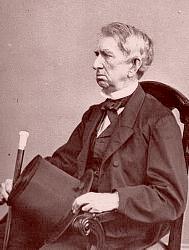 Auburn,
New York approximately 30 miles west of Syracuse, was originally the larger
city. In the mid-Nineteenth Century it was the site of the federal court
serving Central New York. It was also home to two very prominent New Yorkers -
Governor, US Senator and Secretary of State William H. Seward, and after the end
of the Civil War, Harriet Tubman. Tubman made her home in Auburn on land sold
to her by Seward. Both Seward and Tubman are buried in Auburn.
Auburn,
New York approximately 30 miles west of Syracuse, was originally the larger
city. In the mid-Nineteenth Century it was the site of the federal court
serving Central New York. It was also home to two very prominent New Yorkers -
Governor, US Senator and Secretary of State William H. Seward, and after the end
of the Civil War, Harriet Tubman. Tubman made her home in Auburn on land sold
to her by Seward. Both Seward and Tubman are buried in Auburn.
The political career of William H. Seward spanned decades. A progressive
and pragmatic politician, Seward avoided the extremes of anti-slavery policy
that Gerrit Smith and others sought to impose on him and other candidates for
political office. He entered the NYS Senate on the anti-Mason platform, and
served there until 1834. He was elected and served as Governor of New York
State from 1838 to 1843 on the Whig platform. From 1849 to 1861 he served in
the United States Senate, and subsequently he served as Lincoln's Secretary of
State. In that position he negotiated the US purchase of Alaska.
 Despite
his more moderate anti-slavery position, Seward, then a US Senator, bailed out
the Jerry Rescuers when they were taken to
Auburn for arraignment. In 1858, while seeking the Republican nomination for
President, Seward delivered his famous speech On The Irrepressible Conflict.
After John Brown's raid on Harper's Ferry, the democratic Press refernced this
speech as supposed evidence of Republican responsibility and/or complicity.
Despite
his more moderate anti-slavery position, Seward, then a US Senator, bailed out
the Jerry Rescuers when they were taken to
Auburn for arraignment. In 1858, while seeking the Republican nomination for
President, Seward delivered his famous speech On The Irrepressible Conflict.
After John Brown's raid on Harper's Ferry, the democratic Press refernced this
speech as supposed evidence of Republican responsibility and/or complicity.
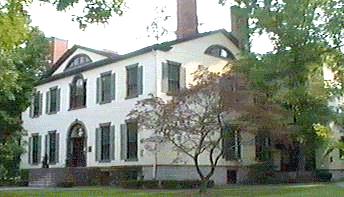
The William H. Seward Home in Auburn is a NY State Historic Site. The home
is open to the public, and regularly scheduled tours are available.
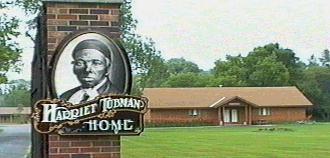 The
home sold by Seward to Harriet Tubman no longer exists.
The Harriet Tubman Home pictured here is on the
site of a home for the aged that she ran in Auburn after the Civil War. This
site, owned and managed by the AME Zion church, includes a library (shown) and
conference center, as well as the building used to house the beneficiaries of
Tubman's efforts.
The
home sold by Seward to Harriet Tubman no longer exists.
The Harriet Tubman Home pictured here is on the
site of a home for the aged that she ran in Auburn after the Civil War. This
site, owned and managed by the AME Zion church, includes a library (shown) and
conference center, as well as the building used to house the beneficiaries of
Tubman's efforts.